When a buyer can research, compare, and act inside one ChatGPT conversation, visibility stops being a single ranking question. A brand can show up twice: as an organic recommendation and as a clearly labeled ad. The two placements may reach the same person, but they do different jobs.
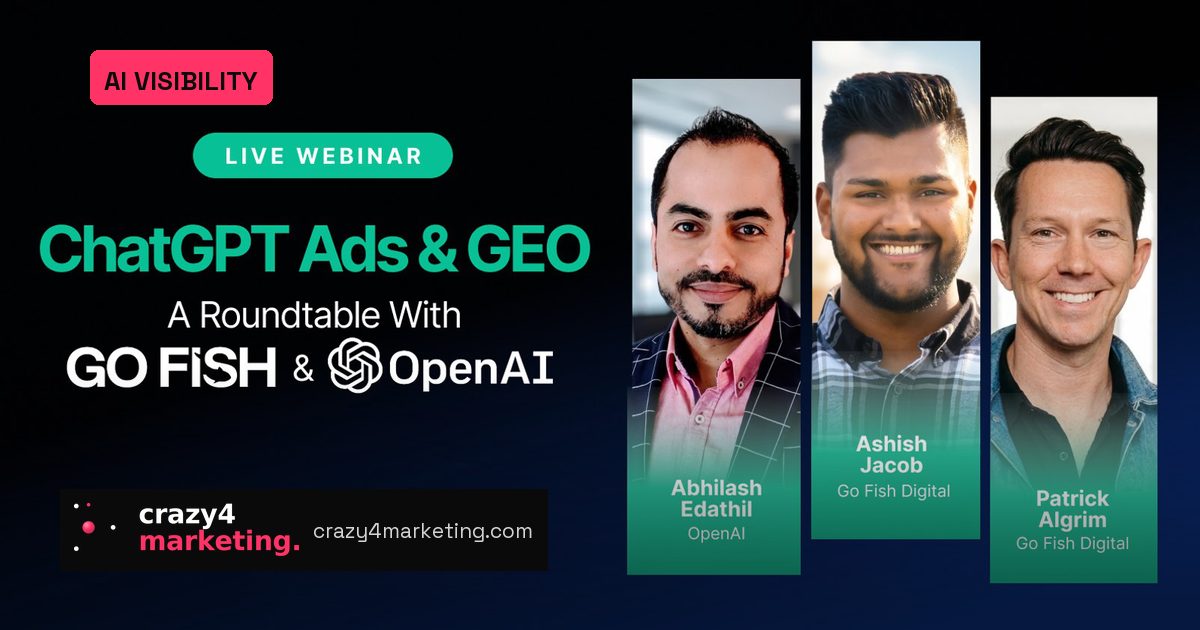
That was the central message from a Search Engine Journal on-demand webinar featuring Go Fish Digital and OpenAI’s monetization team. The session walked through how earned answers and paid placements fit together, how to measure generative engine optimization without treating it like a fixed rank, and how to trace influence when last-click data misses the story.
Earned answers and paid placements are separate tracks
OpenAI’s Abhilash Edathil demonstrated a travel-planning conversation where an ad appeared alongside an organic answer. He said the ad could draw on the conversation context and, with user permission, personalization. Crucially, ads do not inform the model’s answer. Go Fish Digital’s AJ called the brand recommendation earned visibility and the labeled ad paid visibility. Seeing two different brands in those spots is not a contradiction—it’s the system keeping those tracks apart.
For marketers, the implication is discipline. A ChatGPT ads test can put an offer in front of a relevant conversation, but it does not buy inclusion in the assistant’s answer. An earned mention is not an ad impression, and it isn’t proof someone clicked through.
Measure GEO as a pattern, not a rank
AJ argued a single prompt response is too variable to act like a traditional position. He suggested tracking three things:
- Presence: Is the brand mentioned or cited for buyer questions?
- Representation: Is the description accurate and current?
- Competitiveness: How often does it appear relative to relevant rivals?
To make that useful, start with roughly 20–40 customer questions. Run them repeatedly over a week or two with consistent model and settings. Look for recurring gaps instead of treating one answer as a verdict. Patrick Algrim added that quality matters as much as mentions: the evidence available about your products and services shapes what the system can explain.
Fix your own pages before chasing mentions
When asked whether to prioritize a company site or off-site mentions, the Go Fish speakers started with the site. Algrim gave a moving-company example: if a company offers cross-country moves but never says so on its own pages, it shouldn’t assume an AI system will infer that service. Your pages need to answer buyer questions, specify what you actually do, and stay consistent with external descriptions.
He put it simply: start with your website because you can control it. AJ added a technical first check: make sure relevant pages aren’t blocked by robots rules or a CDN. Reviews and PR still matter, but they can’t rescue an unclear or contradictory account.
Paid tests and the partial view of AI referrals
Edathil said ChatGPT ads were shown to eligible adults in the Free and Go versions, not paid versions, with availability by market and vertical evolving. He pointed advertisers to OpenAI’s ads manager to check eligibility and start a test, and recommended choosing the objective first—reach, traffic, or conversions—then connecting conversion data through the pixel or API.
On measurement, AJ warned that AI influence can vanish from last-click reports. Someone may discover a brand in a chatbot, then search separately or paste a URL into a browser. GA4’s AI-assistant referrals show only part of the journey. His fix: supplement them with customer self-reporting and trends in branded and direct traffic, and keep assistants separate in reports.
What we’d do next
The practical takeaway is to pick one buyer problem and run a focused test—not chase every new GEO tactic. A useful first pass looks like this:
- Write down buyer questions and check recurring answers for presence, accuracy, and competitor comparisons.
- Audit the pages that should answer those questions: clarify services, eligibility, and differentiators, then check crawler access.
- If the account is eligible and paid placement fits, run a limited ChatGPT ads test with defined outcomes.
- Review AI referral data next to branded demand, direct traffic, and customer-reported influence—and document changes.
The opportunity is real, but it’s easy to over-invest in signals that don’t connect to revenue yet. Earned AI visibility rewards clarity, consistency, and evidence. Paid placements reward objective-driven testing. The brands that win will treat them as separate levers in the same buying conversation.
Source: Search Engine Journal