
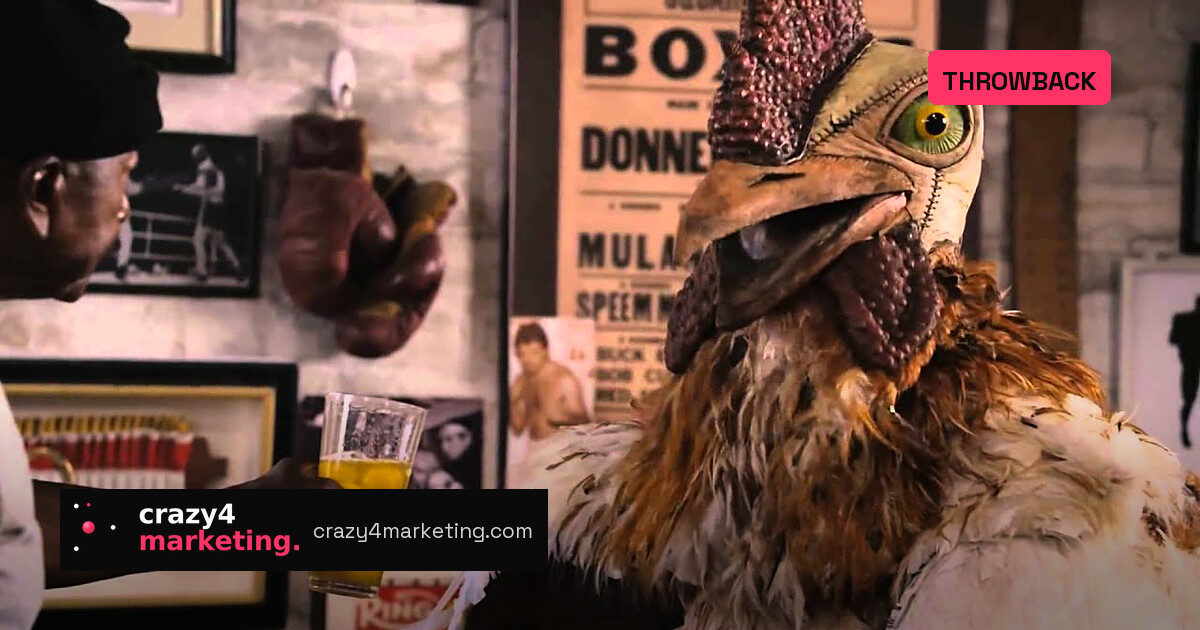
In 2004, Burger King needed chicken to feel like more than a menu item. The brand had the TenderCrisp sandwich and a promise, Have it your way. Crispin Porter + Bogusky turned that promise into a man in a chicken suit, a webcam, and a text box.
The hook, in 2004
The campaign launched around Burger King’s TenderCrisp chicken sandwich. But the piece that broke through wasn’t a traditional TV spot. It was a website, subservientchicken.com, that invited visitors to type a command and watch a life-sized chicken obey.
The idea was customization as spectacle. The chicken took orders because the customer should always get it their way.
How the film was built
Burger King and CP+B built the experience around an interactive, webcam-style illusion. The team filmed a library of command responses, then let the interface stitch them together so the chicken felt live and responsive. Suggested commands helped people learn the rules without breaking the spell.
The character never over-explained itself. The more straight-faced the chicken was, the funnier the submission became.
Why it spread in its day
This launched before social platforms matured. It traveled by email, message boards, and office computers. People shared the link because they wanted credit for finding something weird.
Every command became a social moment: you typed, the chicken responded, and you immediately sent the result to someone else. The interaction was the ad.
What it did for Burger King
Subservient Chicken gave Burger King a culturally alive, internet-native voice after a stretch where the brand felt flat. It strengthened Have it your way by making the customer the director, not just the buyer.
The campaign is credited with lifting awareness for the new chicken line and became a benchmark for participatory marketing. More than two decades later, marketers still talk about it as a turning point for interactive creative.
Steal this: three moves that still work
The technology has changed, but the mechanics still play.
- Make the audience the input. The chicken didn’t deliver a fixed message; it answered the viewer. Participation is the ad.
- Hide the brand in plain sight. Burger King let the chicken be the star and trusted people to connect the weirdness back to the promise.
- Design for the forwarded link. The site was built to be discussed and sent. Each command was a fresh reason to bring someone else in.
Today’s filters, chatbots and real-time stunts reuse the same recipe: give people control, reward curiosity, and don’t over-explain the joke.
Watch the original: Burger King on YouTube