
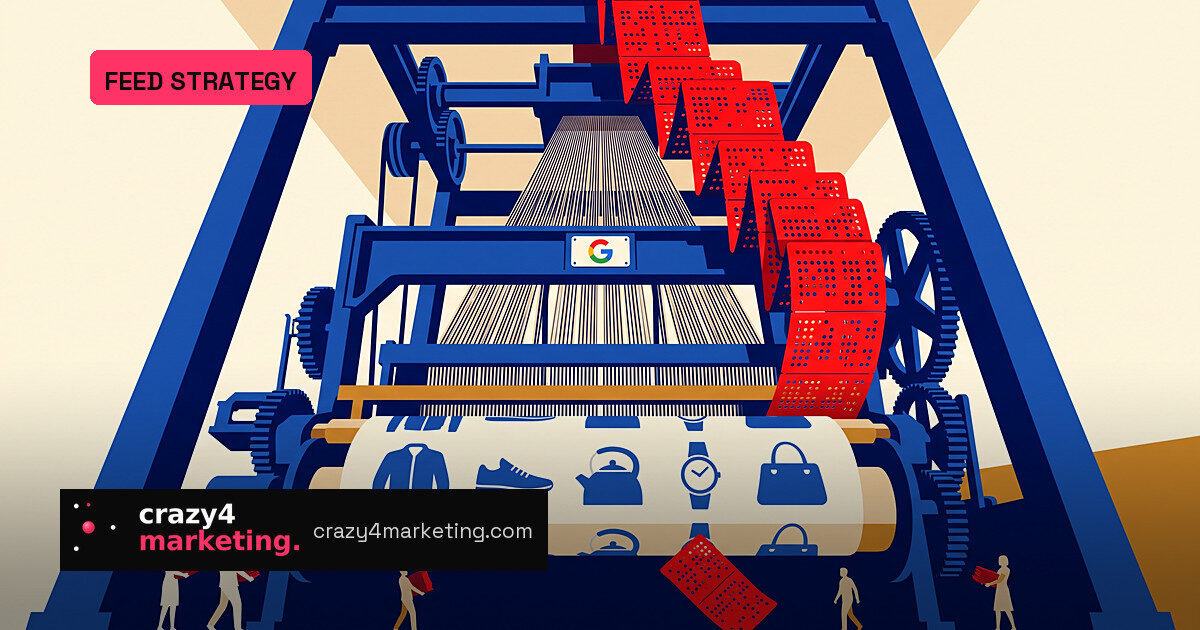
Google does not buy keywords on its shopping surfaces. It assembles Shopping ads, free listings and AI shopping answers from the product records merchants submit in Google Merchant Center. The tool holds no budget and bids on nothing, yet without a live account a brand has no products for Google to advertise.
Launched on September 28, 2009 to replace Google Base, Merchant Center has become the input layer that decides which items are eligible, how they look and where they show across Google Search, YouTube, Gemini and the Shopping tab.
The feed is the product
Products enter through data sources, Google’s 2024 term for feeds. Merchants can auto-import from their store, connect an e-commerce platform, upload .txt, .xml or .tsv files, use Google Sheets, add items one by one or push data through the Merchant API. Supplemental sources sit on top of a primary source and rewrite selected fields without replacing the main catalogue.
Every offer must pass the product data specification. The seven fields Google always requires are:
- id, title and description
- link, image_link, availability and price
Beyond that, obligations scale with category and country. A German apparel listing needs VAT-inclusive pricing, a shipping cost, age_group, gender, color, size and a shared item_group_id for variants. Availability must be one of four English values: in_stock, out_of_stock, preorder or backorder.
Google then crawls the landing page and compares it with the submitted record. Price mismatches, unreachable pages and policy violations produce item disapprovals under Needs attention. Running multiple accounts for the same country is treated as ad network abuse and can end in suspension.
Feed edits are bid changes
Approved items flow to the marketing methods the merchant enables. Paid delivery requires a linked Google Ads account, where Standard Shopping and Performance Max read the catalogue directly. Relevance is derived from titles, descriptions and attributes rather than keywords, so feed optimization behaves like bid optimization.
Merchants can segment bidding with five custom_label fields, each capped at 1,000 unique values per account. The excluded_destination attribute keeps an offer out of Shopping ads, free listings, local inventory ads or YouTube affiliate placements one by one. The product id must also match the identifier fired by remarketing tags, or dynamic remarketing breaks.
The 2026 watchlist
Scale has arrived. Google’s Shopping Graph holds more than 60 billion listings, with over 2 billion updated each hour. Conversational attributes introduced in January 2026 are now documented for AI Mode and AI Overviews, and AI performance insights added on May 27, 2026 report share of voice and attribute completeness specifically for those surfaces.
But freshness is fragile. In January 2026 FeedArmy found automatic import data running nine to ten days old despite Google’s stated 24-hour refresh cycle. The newer AI product import beta performs only a one-time scan and assigns identifiers itself, so there is no ongoing refresh at all.
Regulation is reshaping distribution too. Free product listings and popular product carousels disappeared from Google Search across the European Economic Area on September 17-18, 2026, with some countries recording 90-100 per cent drops after Digital Markets Act requirements. The Stockholm Patent and Market Court had already ruled on July 1, 2026 that the 2017 remedy never ended the abuse, awarding Klarna Technologies, owner of PriceRunner, 950 million pounds in principal damages. In the US, movement ran the other way: Google told Shopify merchants on September 22 that their stores had been matched to Merchant Center and native checkout switched on in AI Mode and Gemini.
The practical play is to treat Merchant Center as a performance channel, not a backend. Audit the seven required attributes, check data freshness before changing bids, map ids to remarketing tags, and revoke old agency access. The feed is now the bid.
Source: PPC Land